Silk in Chinese History and Culture
Silk (丝绸 ; sī chóu) has been an important part of Chinese history and culture for thousands of years. From clothing to long-distance trade, silk is known not only for its beauty, but also for its role in cultural development and China’s connections with the outside world.
In general, silk is a textile made from silk fibers or rayon, either purely or combined with other fibers. In ancient times, the term silk mainly referred to fabrics made from silkworm threads, especially those produced by silkworms that fed on mulberry leaves. In modern usage, the meaning of silk has become broader, while fabric made entirely from mulberry silk is specifically called pure silk (真丝绸 ; zhēn sī chóu).
Through processing and weaving, silk threads can be made into various types of fabric such as ling (绫 ; líng), luo (罗 ; luó), chou (绸 ; chóu), and duan (缎 ; duàn), which have long been associated with luxury and prestige.
The Origins of Silk
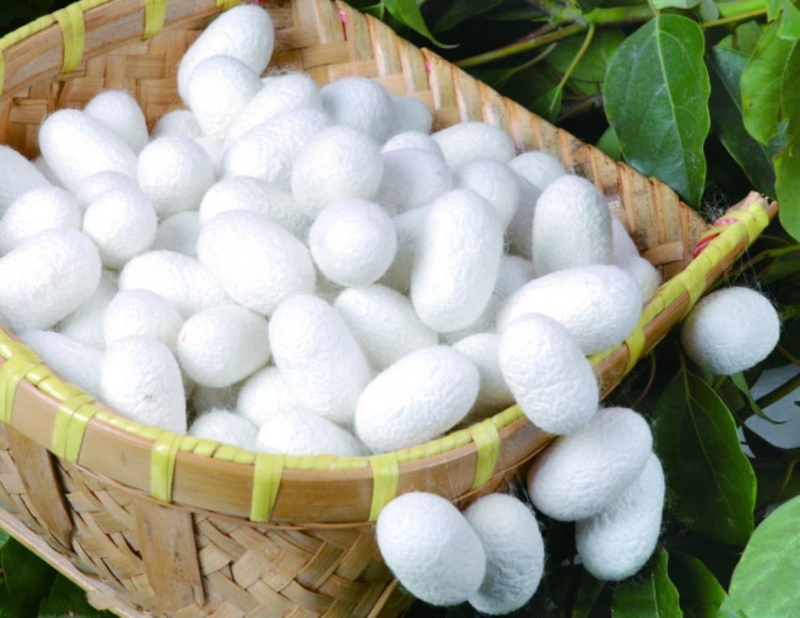
More than 5,000 years ago, ancient Chinese societies were already familiar with mulberry cultivation, silkworm rearing, thread spinning, and silk weaving.
According to legend, Leizu (嫘祖 ; Léi zǔ) was the figure who introduced silkworm rearing and silk production. This tradition later developed particularly in the Central Plains.
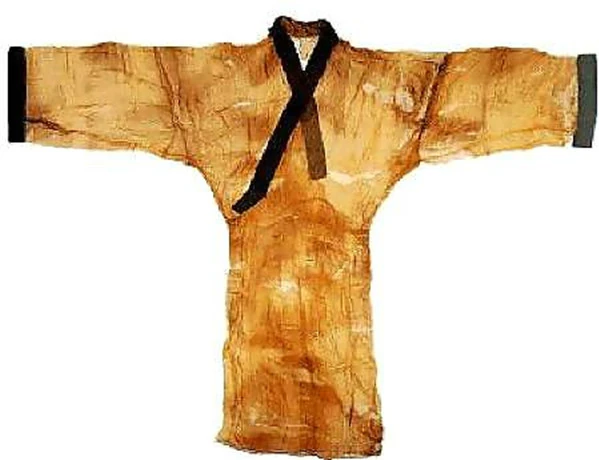
Silk then became one of China’s characteristic products. More than 2,000 years ago, the silk trade opened economic and cultural connections between China and regions beyond East Asia. From this point onward, silk became closely associated with the Silk Road (丝绸之路 ; sī chóu zhī lù) and became an important symbol of Chinese civilization.
Since the Western Han dynasty, Chinese silk was exported in large quantities and became a highly renowned commodity. Because of its role, China was even once known as the “Silk Country” (丝国 ; sī guó).
Silk During the Tang Dynasty
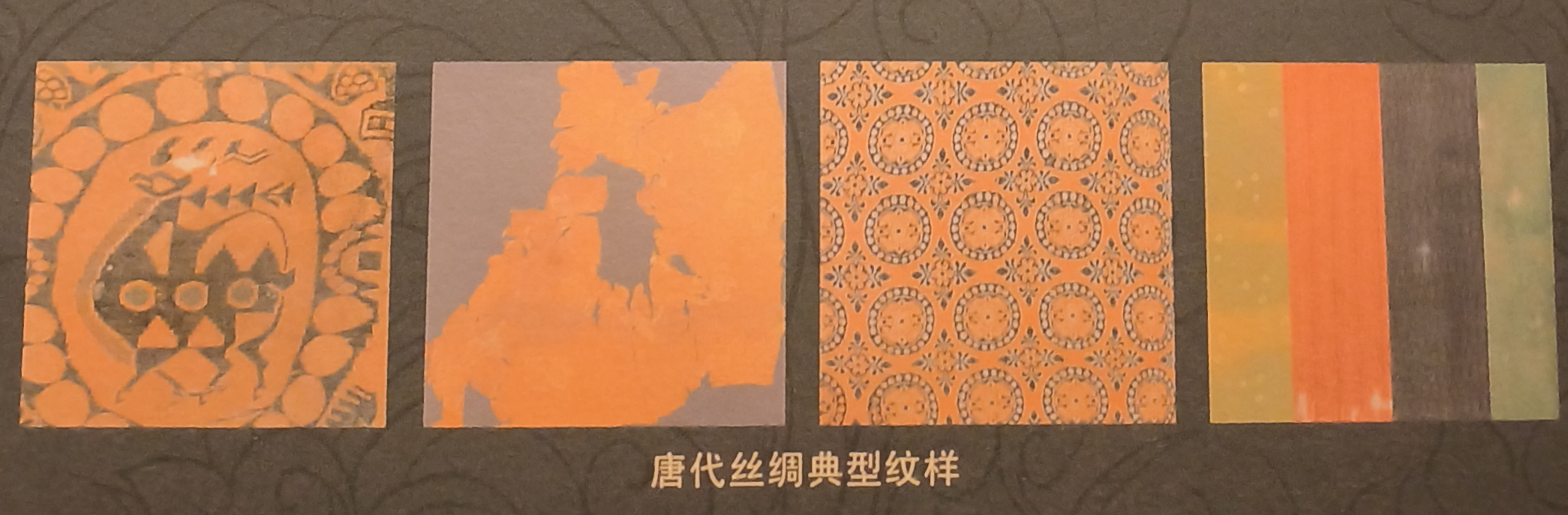
During the Tang dynasty, silk-weaving techniques developed rapidly, particularly in the use of colors and the creation of patterns.
Since the Shang dynasty, China had already produced silk fabrics with diagonal patterns. During the early Western Zhou dynasty, 经锦 (jīng jǐn) emerged, a type of brocade whose patterns were created using various colored silk threads.
Then, in 619 CE, the second year of the Wude era, a technique for creating patterns with weft threads emerged, known as 纬锦 (wěi jǐn). From then on, the use of colored weft threads became increasingly common, making brocade patterns and colors much more diverse.
Four Famous Embroidery Traditions
In addition to silk weaving, different regions of China also developed embroidery traditions with their own distinctive characteristics. The four most famous are Su Xiu, Shu Xiu, Xiang Xiu, and Yue Xiu.
Su Xiu (苏绣 ; sū xiù)
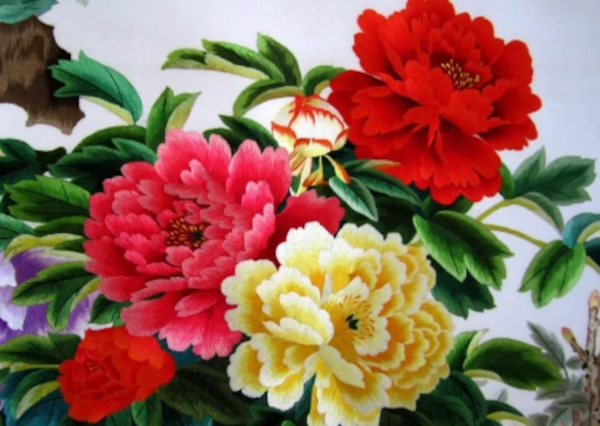
Su Xiu is an embroidery tradition from Jiangsu, with Suzhou as its center. The area around Suzhou, including the Taihu Lake region, provided favorable conditions for the development of silk and embroidery.
Su Xiu is known for its beautiful patterns, harmonious colors, clear lines, lively stitching techniques, and fine craftsmanship. Because of these characteristics, Su Xiu is often called the “Pearl of the Orient.”
Shu Xiu (蜀绣 ; shǔ xiù)
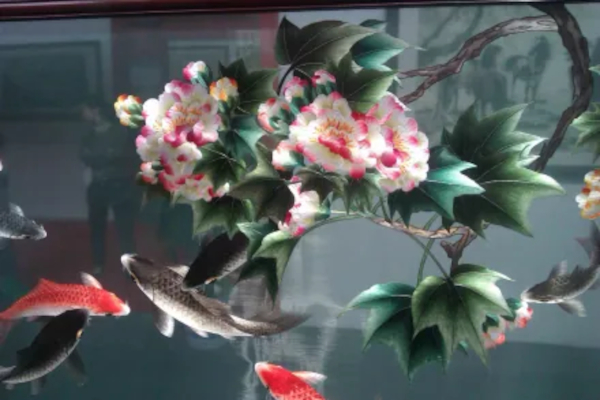
Shu Xiu, or Chuan Xiu (川绣 ; chuān xiù), originated in Sichuan, with Chengdu as its center.
Its embroidery themes are highly diverse, ranging from flowers and birds, animals, landscapes, insects and fish, to human figures. In addition to decorative pieces, Shu Xiu is also used on various everyday items such as clothing, shoes, pillowcases, quilts, tablecloths, and handkerchiefs.
For this reason, Shu Xiu has not only aesthetic value but is also used in everyday life.
Xiang Xiu (湘绣 ; xiāng xiù)
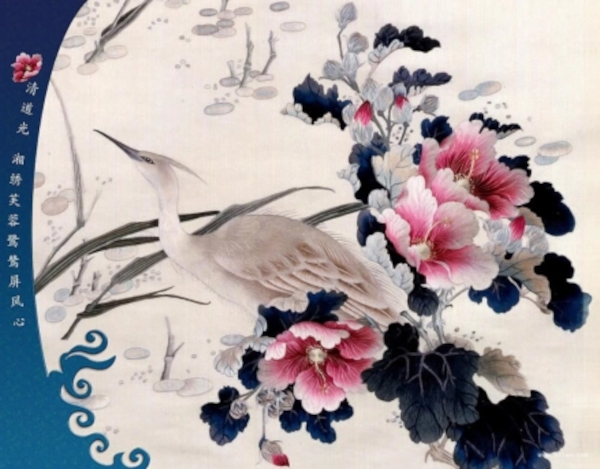
Xiang Xiu is an embroidery tradition from Hunan, with Changsha as its center.
One of its characteristics is the use of velvet threads that are specially processed to prevent them from becoming fuzzy. Xiang Xiu also draws heavily from Chinese painting, with lively and realistic forms.
Its beauty has been described through an expression that says embroidered flowers seem to have a fragrance, birds seem able to sing, tigers seem able to run, and human figures seem to have living expressions.
The colors used also vary according to the type of work. Embroidery based on painting tends to use black, white, and gray, creating an effect similar to ink painting, while everyday Xiang Xiu products generally use brighter colors.
Yue Xiu (粤绣 ; yuè xiù)
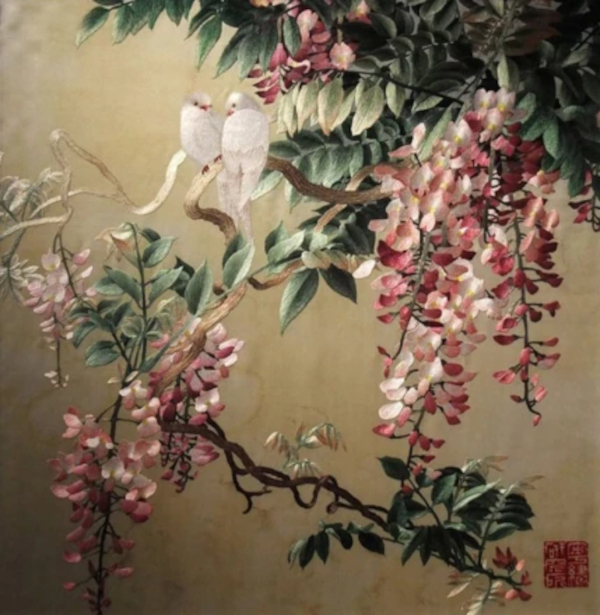
Yue Xiu is an embroidery tradition from Guangdong that includes: Guang Xiu (广绣 ; guǎng xiù) from Guangzhou and Chao Xiu (潮绣 ; cháo xiù) from Chaozhou.
The tradition began to develop during the Tang dynasty, established its distinctive characteristics during the Ming dynasty, and became increasingly known overseas through trade from Guangzhou Port during the Qing dynasty.
Yue Xiu is known for its strong and vivid colors, decorative compositions, smooth and glossy embroidered surfaces, and highly skilled craftsmanship.
Interestingly, in the past, most Yue Xiu embroiderers from Guangzhou and Chaozhou were men, which was relatively uncommon in embroidery traditions.
Three Famous Brocades
In addition to the four embroidery traditions, China also has three famous types of brocade: Yun Jin, Shu Jin, and Song Jin.
Yun Jin (云锦 ; yún jǐn)
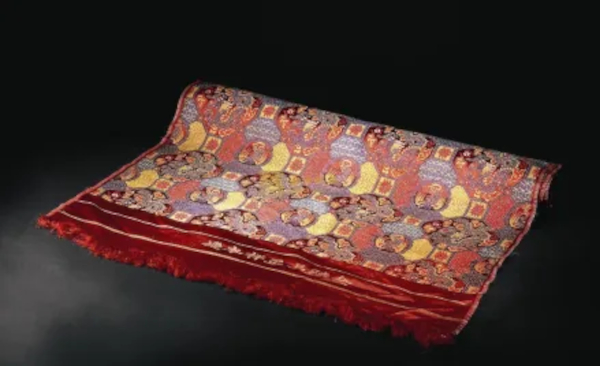
Yun Jin is a type of silk brocade from Nanjing, known for its complex weaving techniques, beautiful patterns, and rich colors.
One of its characteristics is the change in color across certain parts of the pattern, making the appearance look different from different viewing angles.
Its tradition can be traced back to the Song dynasty and flourished during the Ming and Qing dynasties. During the Yuan, Ming, and Qing dynasties, Yun Jin was also used for royal purposes.
Shu Jin (蜀锦 ; shǔ jǐn)
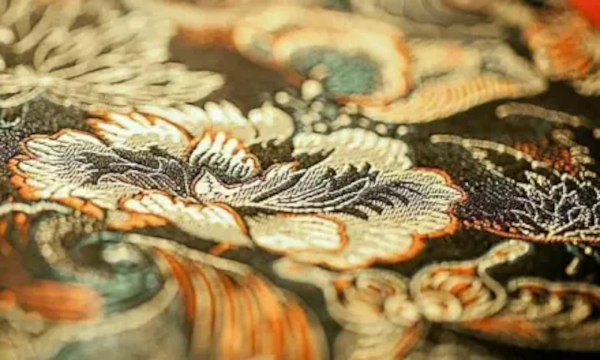
Shu Jin originated in Sichuan and originally referred to the colored brocade produced in the region.
Its motifs are highly diverse, ranging from legends, historical stories, auspicious symbols, landscapes, human figures, flowers, birds, to animals. Its techniques combine colored threads with geometric patterns and various decorative motifs.
Shu Jin also became an important commodity along the Silk Road and has a historical connection with the development of the Nishijin-ori tradition in Kyoto, Japan.
Song Jin (宋锦 ; sòng jǐn)
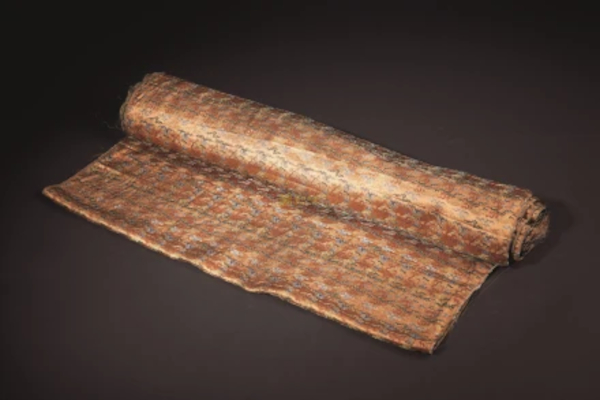
Song Jin originated in the late Song dynasty and was mainly produced in Suzhou.
The fabric has fine and orderly patterns while still offering a wide variety of designs. Its colors are vivid without being excessive, while its production technique uses warp and weft threads together to create patterns.
In addition to being beautiful, Song Jin is also relatively strong and durable, giving it various practical uses.
Song Jin developed from the earlier Shu Jin tradition and later became part of China’s intangible cultural heritage.
Silk and the Silk Road
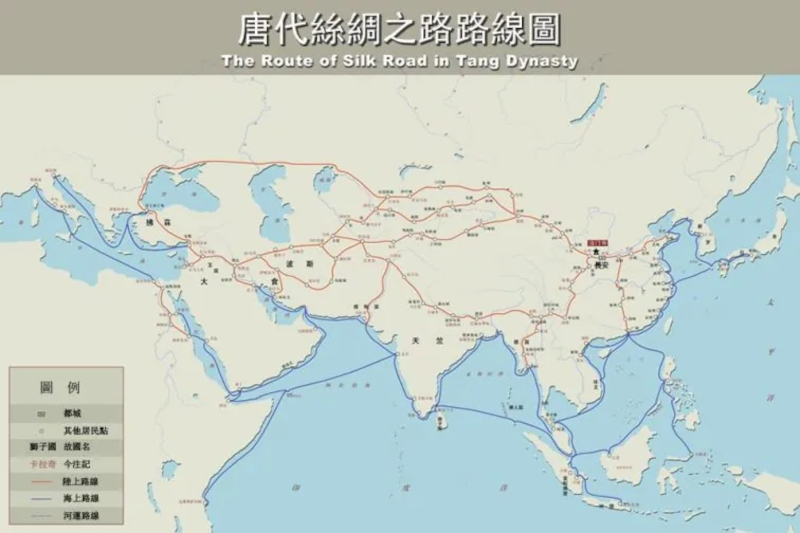
The connection between silk and the Silk Road (丝绸之路) is an important part of its history.
The Silk Road was not actually a single road, but a network of trade routes connecting different regions of Asia and beyond.
The land routes connected ancient China with Central Asia, Western Asia, and the Mediterranean region. Their starting points changed according to the historical period. During the Western Han dynasty, for example, the route began in Chang’an, while during the Eastern Han dynasty, Luoyang was one of its main starting points.
At first, one of the most important commodities carried along these routes was Chinese silk. However, trade did not only transport goods. Various ideas, religions, technologies, and cultures also moved through the network.
The term “Silk Road” itself was only introduced in the 19th century. In 1877, German geographer Ferdinand von Richthofen used the term in his book China to refer to the network of trade routes connecting China with Central Asia and India.
The Maritime Silk Road
In addition to the land routes, there was also the Maritime Silk Road, a network of sea routes used for trade and cultural exchange between China and other regions.
The route was mainly centered on the South China Sea and began to develop during the Qin and Han dynasties. Its importance grew during the Tang, Song, Yuan, and Ming dynasties.
In 2014, the eastern section of the Land Silk Road, known as the “Silk Roads: the Routes Network of Chang’an-Tianshan Corridor,” was designated a UNESCO World Heritage Site through cooperation between China, Kazakhstan, and Kyrgyzstan.
From threads produced by silkworms to luxury fabrics traded across continents, the journey of silk reflects more than the development of Chinese textile techniques.
Silk also shows how clothing, craftsmanship, trade, and cultural exchange are interconnected. This is what has allowed silk to remain an important part of Chinese history and culture to this day.