3 Song Dynasty Women’s Headdresses (首服) Styles
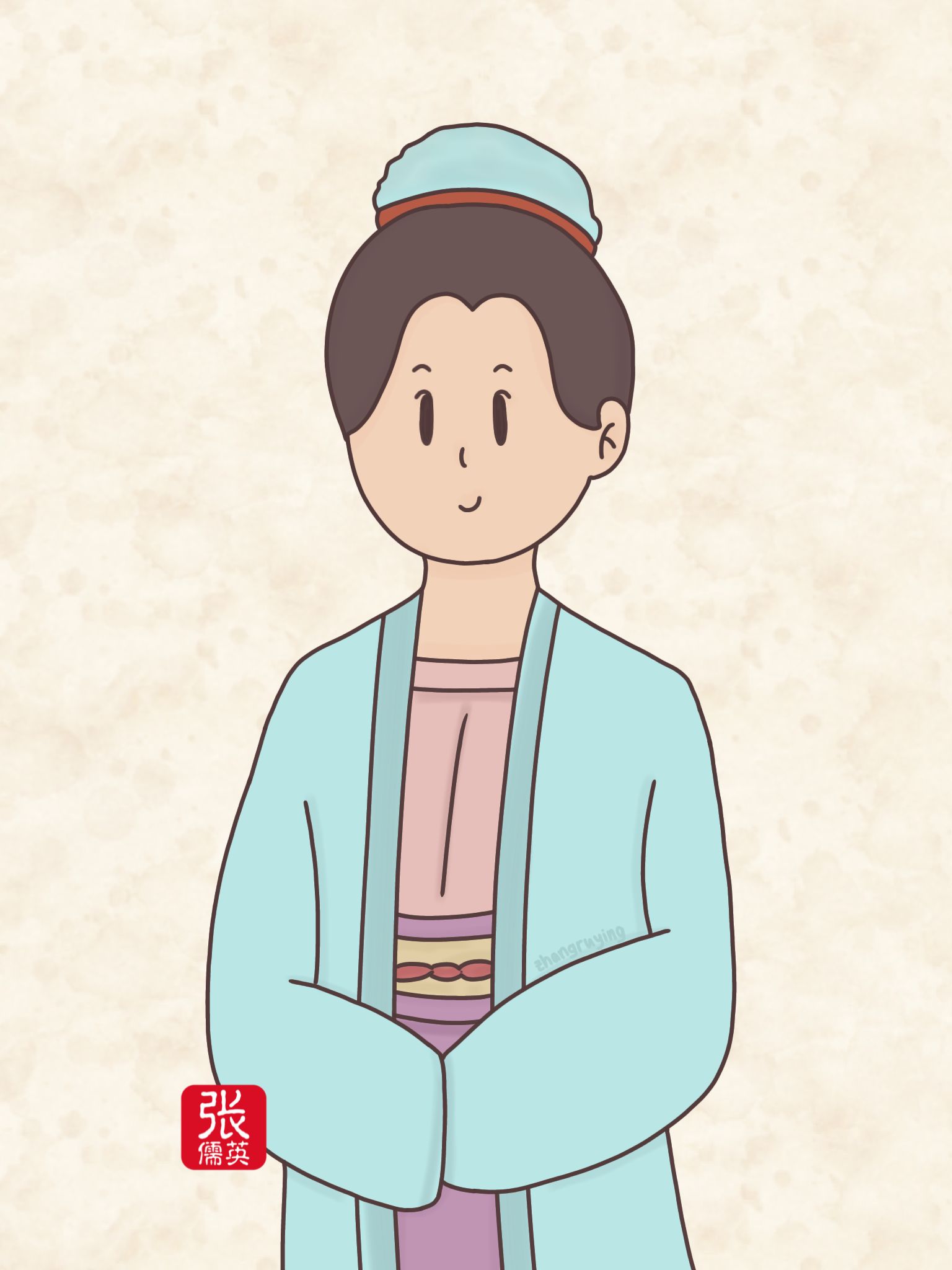
After exploring the Song dynasty’s women headdresses (发冠 ; fā guān), let’s take a closer look at other fascinating forms of Song dynasty women’s headdresses (首服 ; shǒu fú) 一 Weimao, Gaitou, and Toujin.
1. Weimao (帷帽 ; wéi mào)
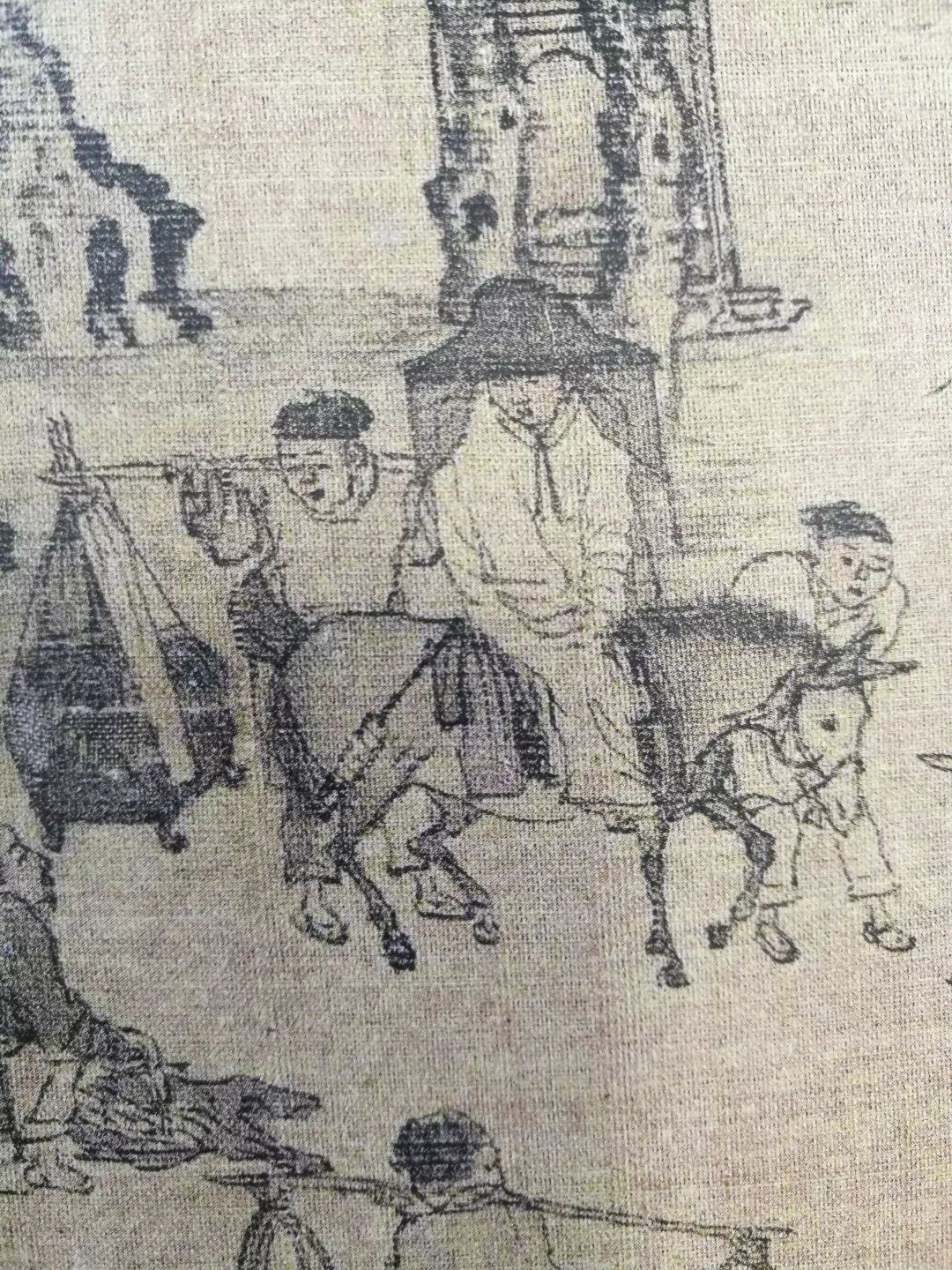
The Weimao of the Song dynasty inherited its style from the Tang dynasty. Along the edge of this woven hat, which had a high crown and wide brim, a thin and transparent veil was attached all around. This hat was worn by women when going out, on one side to cover their faces and also protect them from wind and dust.
In the painting Qing Ming Shang He Tu (清明上河图 ; qīng míng shàng hé tú), we can see women wearing Weimao while riding donkeys.
2. Gaitou (盖头 ; gài tou)
If Weimao was a veil of journey, Gaitou was the fabric of daily life. It came in two forms, one was made from a long piece of cloth sewn into the shape of a wind hood with a back part hanging down like a skirt, similar to men’s hoods. It was worn on top of the head to cover the temples or placed behind the ears, then tied with a string, exposing the face while the cloth draped over the shoulders and back.
In Qingbo Zazhi (清波杂志 ; qīng bō zá zhì) by Zhou Hui (周辉 ; Zhōu Huī), it is recorded: “Scholars wear light garments while riding horses, while women walking on the main streets wear square pieces of purple cloth covering half of the body. This is called ‘Gaitou.’” From this record, it can be seen that women often wore Gaitou when going out. Made from square-shaped cloth, it could cover the upper body. In Qing Ming Shang He Tu (清明上河图), there are also women wearing this type of Gaitou.
Another type was called Mianyi (面衣 ; miàn yī). Gao Cheng (高承 ; Gāo Chéng) of the Song dynasty wrote in Shiwu Jiyuan (事物纪原 ; shì wù jì yuán): “Mianyi was made entirely of purple silk, hanging down in the front and back, decorated with four ribbons of different colors hanging on the back. It was used by women when traveling long distances or riding horses.”
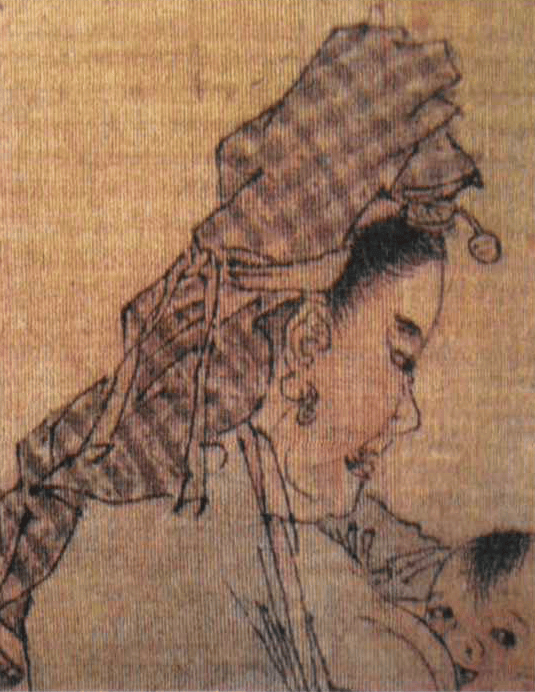
Mianyi had a simple shape — just a rectangular piece of cloth used to cover the face from the front and back, draped over the shoulders and back. The record in Shiwu Jiyuan mentioned that Mianyi had four differently colored ribbons, while on the female figurine unearthed from the tomb of the couple Hong Zicheng (洪子成 ; Hóng Zǐchéng) in Poyang, Jiangxi, the Mianyi worn did not have ribbons, indicating that the decoration could be made with or without additional ribbons.
The Gaitou in the Song period could be used to block wind, dust, or cold. In addition, red Gaitou or red Gaitou decorated with gold was one of the betrothal gifts in Song folk weddings. During marriage, brides wore red Gaitou to cover their faces as a symbol of modesty.
In a poem by Mao Hu (毛瑚) of the Song dynasty, Wumen Tianjia Shiyong · VIII (吴门田家十咏·其八 ; wú mén tián jiā shí yǒng · qí bā), there is a verse: “The farmer’s wife is the most charming, wearing a white horn crown and a black Gaitou.” From this, it can be seen that Gaitou could be worn together with hair crowns.
3. Toujin (头巾 ; tóu jīn)
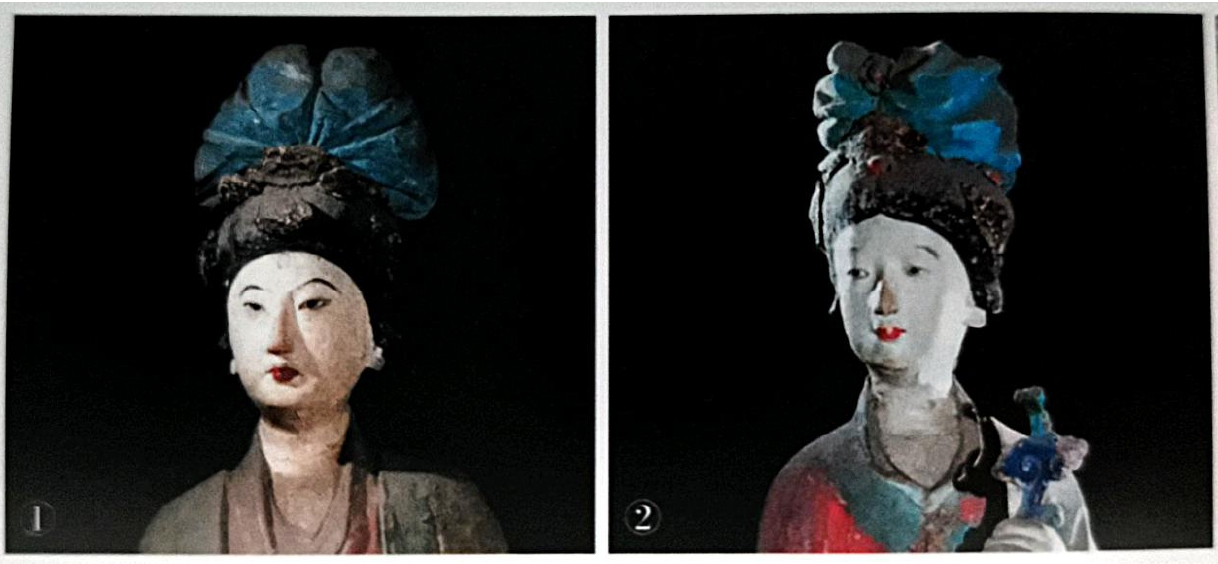
Then there was the Toujin; ways of wearing Toujin among Song dynasty women varied. Some wrapped around the hair bun, resembling layers of clouds; this style can be seen in the painted sculptures of the Shengmu Hall, Jinci Temple, Taiyuan, Shanxi, depicting maids with headscarves wrapping their hair buns.
Another way was to tie the Toujin at the front and back to secure the bun, a method commonly used by working-class women. This can be seen in the Song dynasty stone carvings at Dazu, Chongqing, in the statue “Chicken-Raising Woman (养鸡女 ; yǎng jī nǚ),” where the woman’s headscarf is tied in this way.
In addition to the types of headwear mentioned above, palace dancers and maids often wore Futou (幞头 ; fú tóu) and Mo E (抹额 ; mǒ é), while actresses in dramas wore Hunguo (诨裹 ; hùn guǒ). All these headwear styles also served as special identity markers for them.
Source: 《我在宋朝穿什么》 by 陆蕾