History & Use of Traditional Chinese Fan
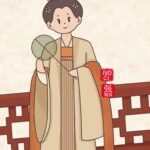
What does a traditional Chinese fan look like? Although they are no longer available in material form, according to Mr....
6 June 2023
What does a traditional Chinese fan look like? Although they are no longer available in material form, according to Mr....

Those who watch costume/historical dramas often find that there is such a department in the drama: Da Li Si (Dali...
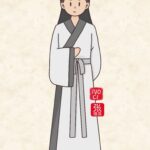
Fujin (Chinese: 幅巾 ; pinyin: fú jīn), also known as Jinze (巾帻 ; jīn zé) or Patou (帕头 ; pà...

Chinese knot was originally made of sewing and knotting in the Paleolithic Age, then extended to the rites and records...
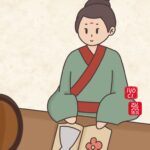
The red pattern on the ancient women’s forehead was called “Huadian (Chinese: 花钿 ; pinyin: huā diàn)”. Huadian is a...

Ming dynasty women’s hairstyles originally kept the style of the Song and Yuan dynasties and put their hair in a...
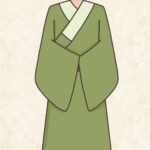
Wangjin (Chinese: 网巾 ; pinyin: wǎng jīn) is a net headwear worn by adult males to wrap their hair, and...

Chinese knot (Chinese: 中国结 ; pinyin: zhōng guó jié) is a decorative handcraft that began as a form of Chinese...

In ancient China, women’s headwear was very diverse. In addition to gold and silver jewelry, flowers were also often used...
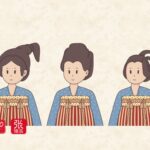
Throughout the Tang dynasty, the high bun enjoyed great popularity. Due to the luxury of the ruling class, the makeup...