“Employee Badge”: Proof of Authorization in Ancient China
Employee badges in ancient times differed from modern employee badges in both form and function. In ancient China, there were no employee badges in the modern sense, but there were several items with similar functions, such as Yufu (鱼符 ; yú fú) and Yapai (牙牌 ; yá pái).
Warring States Period
During his reforms in the state of Qin, Shang Yang created the “Zhaoshentie (照身帖 ; zhào shēn tiē)”, a bamboo tablet engraved with the holder’s portrait and place-of-origin information, which can be regarded as the earliest form of an employee badge in ancient China.
Sui and Tang dynasties
The Yufu (鱼符) appeared, shaped like a fish and consisting of two parts, left and right. It was engraved with the official’s name, office, and rank. The material of the Yufu varied according to rank: princes and officials of the third rank and above used gold Yufu, those of the fifth rank and above used silver, and those of the sixth rank and below used bronze.
Song dynasty
The Yufu was abolished, and officials’ identity tokens became waist plaques (腰牌 ; yāo pái).
Ming dynasty
Officials used Yapai (牙牌) as identity markers, made from materials such as ivory, animal bone, and wood.
Qing dynasty
Waist plaques (腰牌) contained more information, some even engraved with the holder’s facial features to prevent misuse.
Du Tiger Tally from the Warring States Period (战国杜虎符 ; zhàn guó dù hǔ fú)
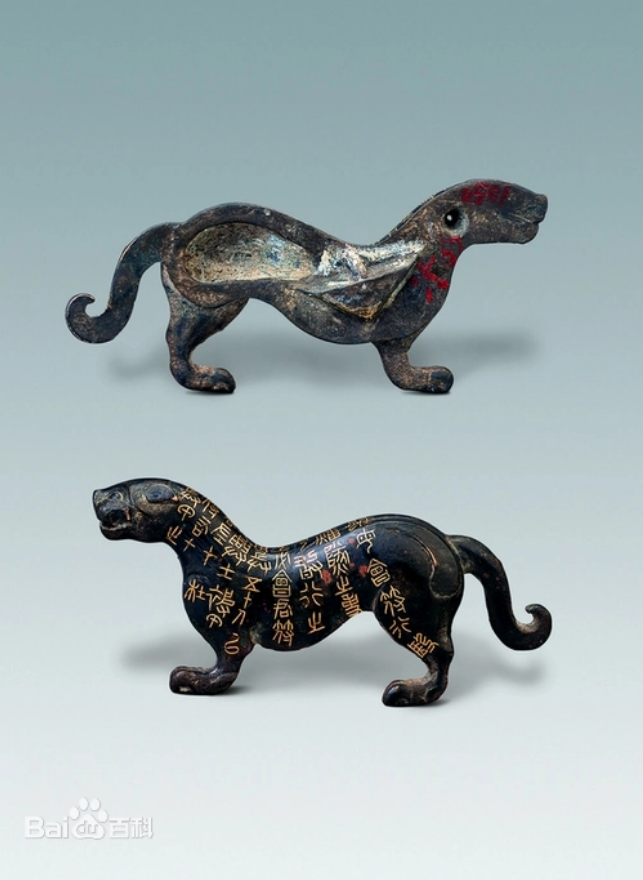
The earliest surviving proof of military mobilization
Collection: Shaanxi History Museum
On the back of the tiger are gold-inlaid inscriptions of 9 lines and 40 characters. The meaning is: to mobilize more than 50 armored soldiers, the left tally of Du must be matched with the ruler’s right tally before action can be taken. However, in emergencies such as beacon fire warnings, it is not necessary to wait for the ruler’s tally, reflecting the highly centralized yet flexible and practical military system of Qin.
Bronze Yufu of the Tang Dynasty (唐代铜鱼符 ; táng dài tóng yú fú)
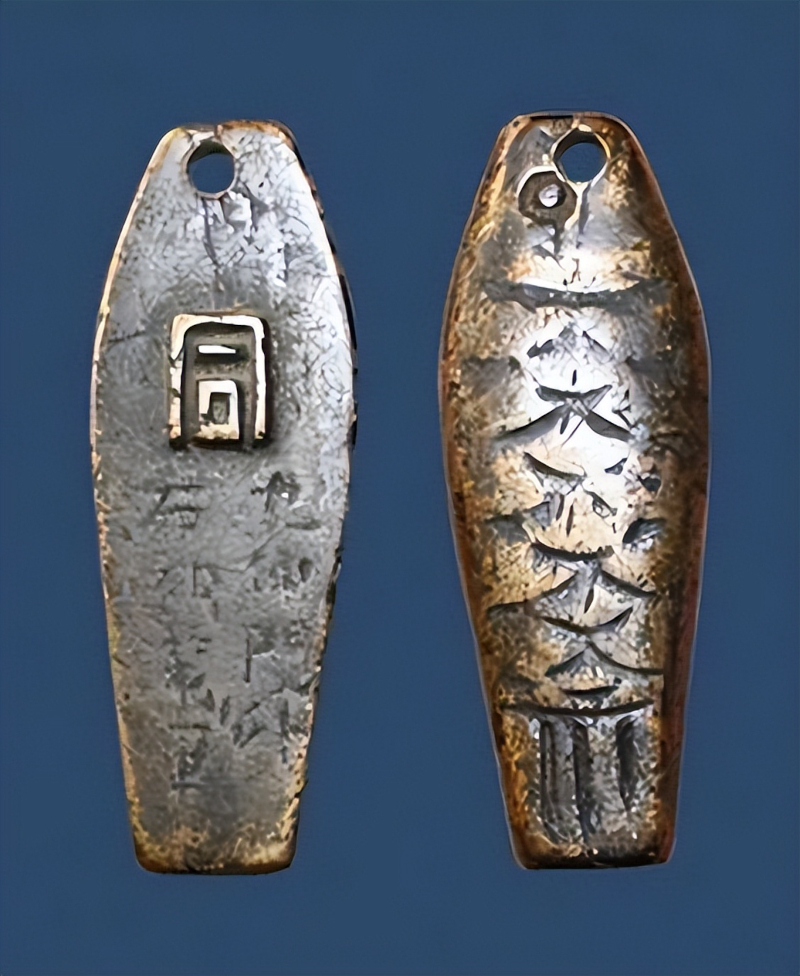
The mobilization code of the Shence Army (神策军)
Collection: Dongying History Museum, Shandong
Emperor Gaozu of Tang avoided the name of his ancestor “Li Hu 李虎”; the Hufu (虎符) was changed to Yufu. The outer side is carved with fish-scale patterns, while the inner side bears the inscription “九仙门外右神策军”. Jiuxian Gate is the western gate of Daming Palace, and the Shence Army was the central elite force. In the middle is a joint shaped like the character “同 (tóng)” that fits together, from which the term “合同 (hé tóng)” originates.
Turtle Tally of the Wu Zhou Dynasty (武周龟符 ; wǔ zhōu guī fú)
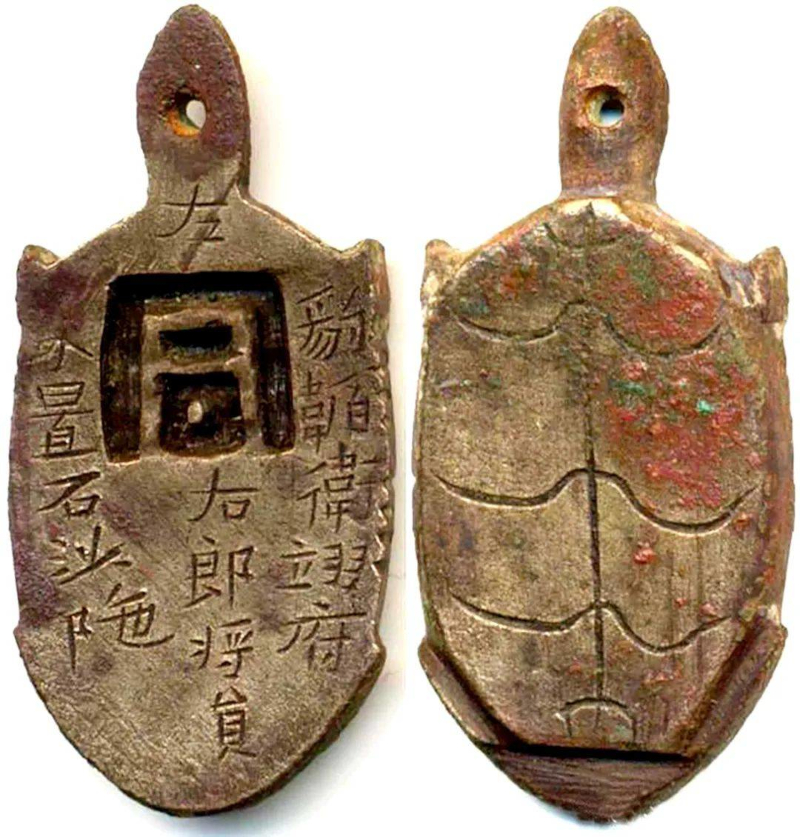
Collection: Bayingolin Mongol Autonomous Prefecture Institute of Culture and Museum
After Wu Zetian ascended the throne, she felt that “fish” reminded people of the Li Tang dynasty, so she replaced the Yufu with Guifu (龟符 ; guī fú). On the Guifu’s underside is engraved “右玉钤卫将军员外置阿史那伽利支”, which was the credential of the famous Western Regions general Ashina Zhong (阿史那忠 ; Ā Shǐ Nà Zhōng). At that time, officials of the third rank and above wore gold turtle tallies — from then on, “金龟婿 (金龟婿 ; jīn guī xù)” became synonymous with a wealthy and successful man.
Western Xia Bronze Waist Plaque (西夏青铜腰牌 ; xī xià qīng tóng yāo pái)
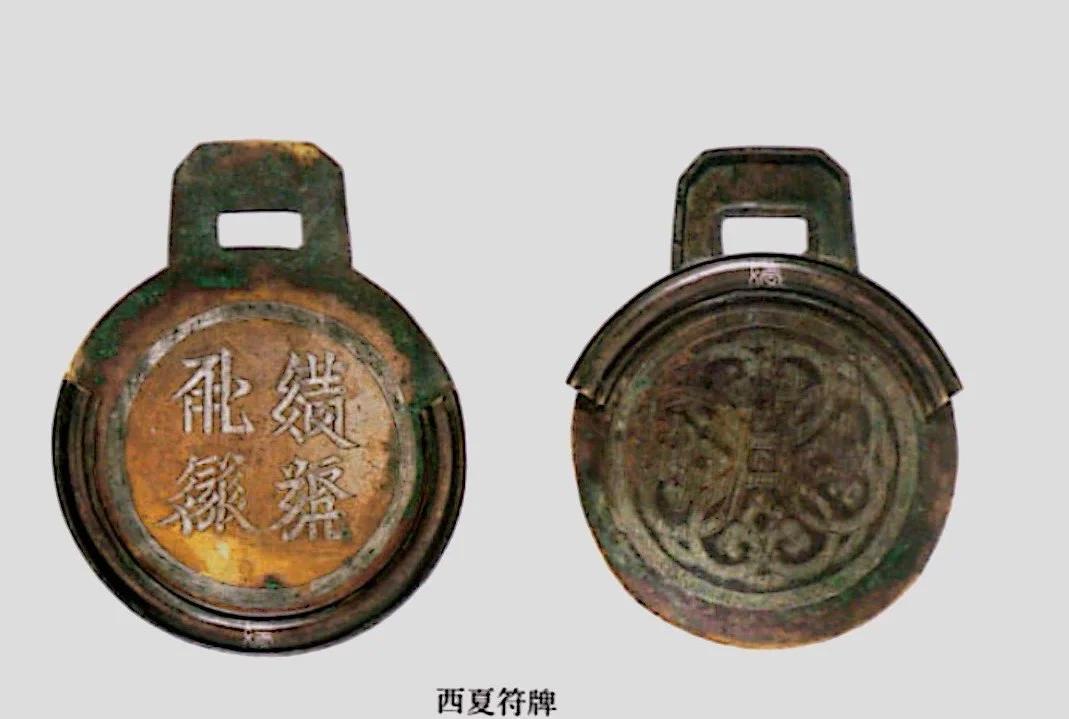
Collection: National Museum of China
This is an official token from a non-Central Plains dynasty. Western Xia was founded by the Tangut people, so its plaque form differs from those of the Tang and Song. The round bronze plaque served as a pass for entering and exiting the palace, contrasting with the Hufu and Yufu, and reflecting the institutional integration of multi-ethnic regimes from the 11th to 13th centuries.
Phagspa Script Command Token of the Yuan Dynasty (元代八思巴文令牌 ; yuán dài bā sī bā wén lìng pái)
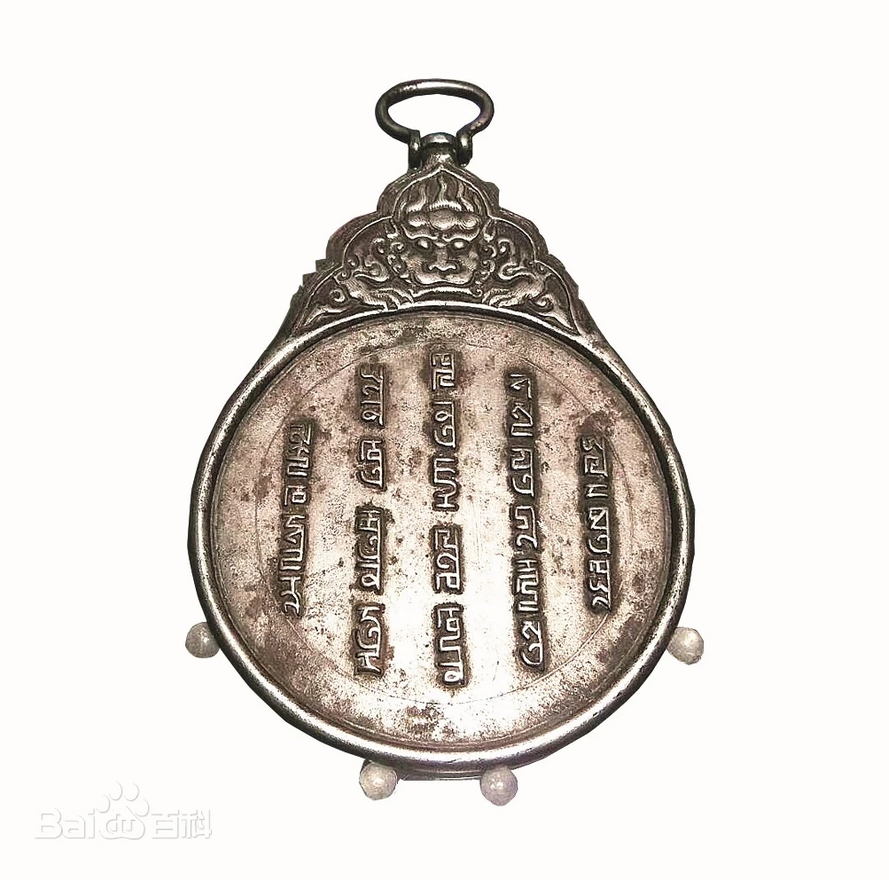
An “international pass” across Eurasia
Collection: Gansu Provincial Museum
The surface is in Phagspa script, meaning “By the Mandate of Heaven, the sacred decree of the Emperor. Those who do not obey with reverence shall be punished.” This was an authoritative token granted by the Yuan emperor, allowing the holder to travel freely across the Yuan territory and the four khanates, passing relay stations day and night — it can be called a “13th-century international pass.”
Ming Dynasty Court Officials’ Yapai (明代朝参官牙牌 ; míng dài cháo cān guān yá pái)
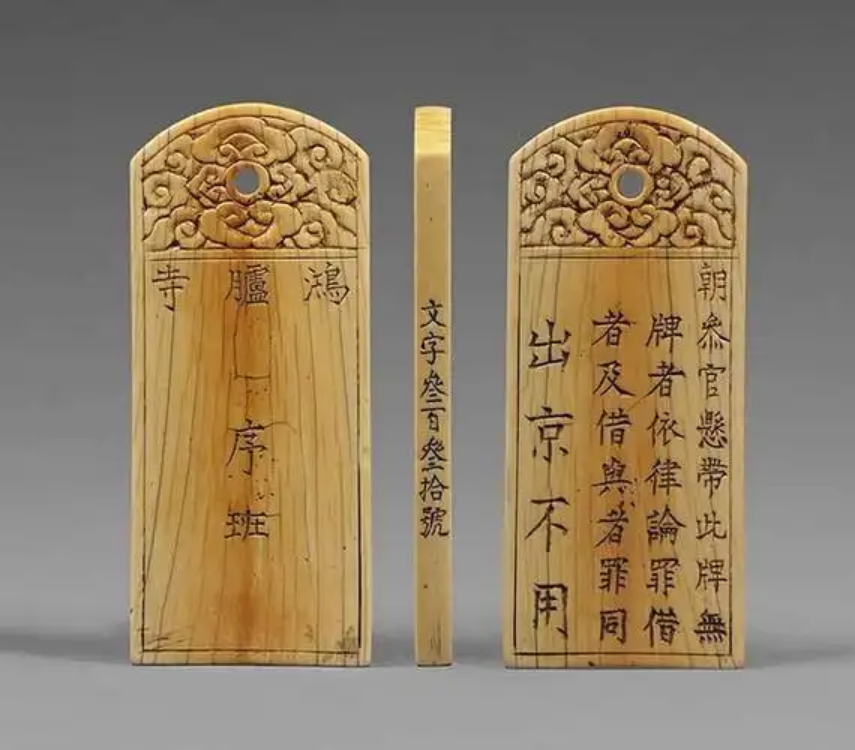
Standard equipment for capital officials
Collection: Qufu Cultural Relics Management Committee, Shandong
The front is inscribed: “Officials attending court must wear this plaque; those without it shall be punished according to law. Lending or borrowing it incurs equal punishment. Not used outside the capital.” Each category had specific characters: nobles used “勋 (xūn)”, imperial sons-in-law “亲 (qīn)”, civil officials “文 (wén)”, military officials “武 (wǔ)”. Without the plaque, entry was denied, showing a very strict system.
Qing Dynasty Joseon Envoys’ Bronze Waist Plaque (清代朝鲜使臣铜腰牌 ; qīng dài cháo xiǎn shǐ chén tóng yāo pái)
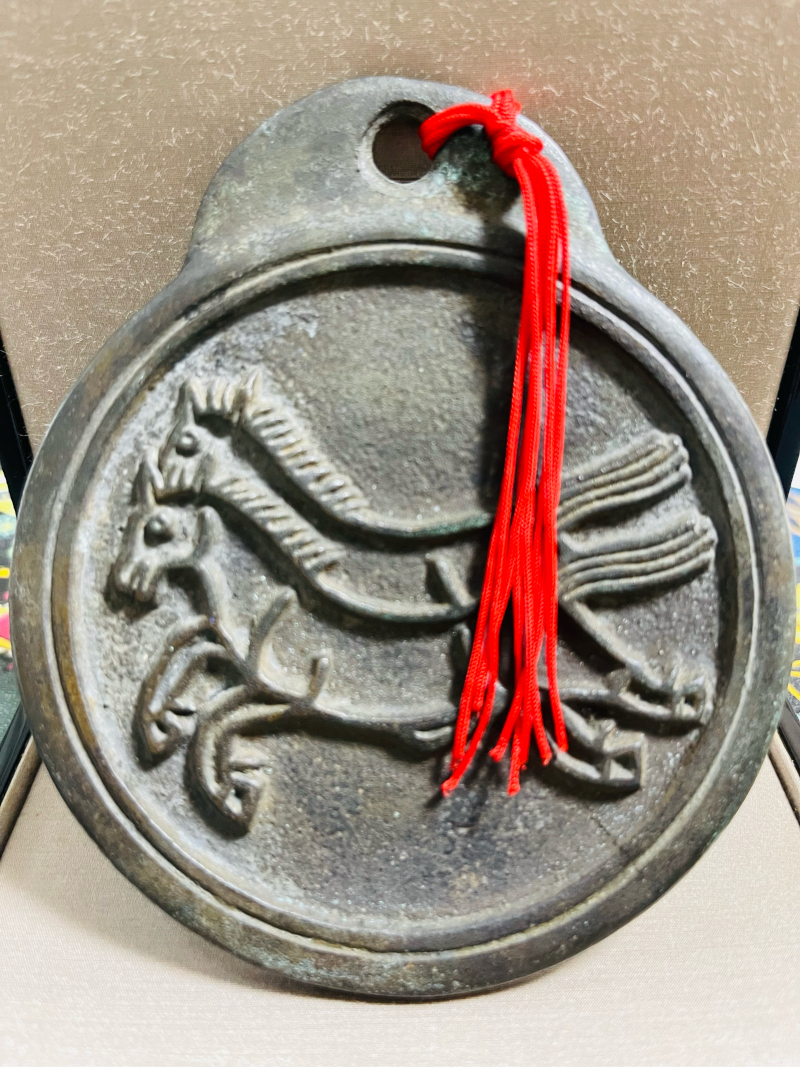
A “diplomatic pass” of a tributary state
Sangseowon was the institution in Joseon responsible for seals and official tokens. This plaque was used by Joseon envoys when traveling to the Qing. It is an official Qing-style plaque used by a tributary state, reflecting the diplomatic relations between ancient China and the Korean Peninsula, and is the only example among the nine types of plaques involving a foreign system.